Hair Loss Compounding Pharmacy . People no longer have to live with hair loss. Etiam semper nibh eget lacus pretium, sit amet porttitor magna iaculis. Hair Support Solution 100mL from www.elixircompounding.com.au Ingredient and prescription medication blend for your hair loss. After evaluation, your dermatologist selects the unique. Hair loss treatment for women.
Ionic Compounds Vs Molecular Compounds. Molecular compounds do not have an exact melting point. Why they are called molecular.
Chemical Bonding Chemistry Is My Jam! from chemistryismyjam.com
The form of bonding between these atoms is known as covalent bonding. 10 rows molecular compounds are formed due to covalent bond between elements, while ionic compound. The nonmetals simply share their valence electrons for a full octet.
Molecular Compounds Can Be In Any Physical State ‘“ Solid, Liquid, Or Gas.
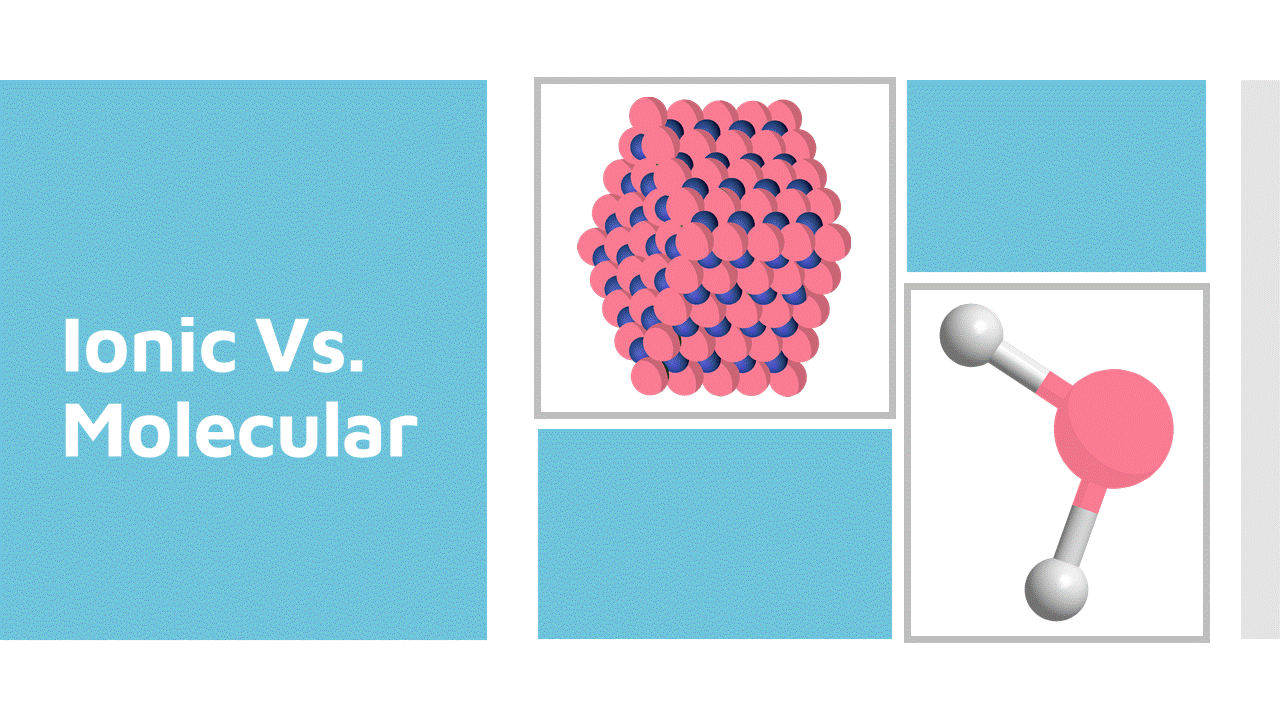
Looking at the table, you can tell how ionic vs molecular compounds vary from each other, starting with their definitions. Molecular compounds are poor conductors of electricity while ionic compounds are good conductors of electricity. Ionic compounds can be defined as crystalline solids formed by neatly packed ions of opposite charge.
Array Of Alternating Positive And Negative Ions, Their Formula Is The Simplest.
Here are the key differences between both of them: Ionic compounds are good conductors of electricity but covalent compounds are poor conductors of electricity. N acl = sodium chloride.
Molecular Compounds Are Poor Electrical Conductors While Ionic Compounds Are Good Conductors.
Molecular compounds have a low melting point. Molecular compounds do not have an exact melting point. Compounds and their formula is called.
Ionic Compounds Are Usually In The Solid State At Standard Temperature And Pressure (Stp).
The most important difference between ionic and molecular compounds lies in their formation. Molecular compounds molecular compounds are formed when two or more neutral atoms, i.e. The naming of ionic compounds is dependent upon the type of ionic molecule formed from alkali metals, alkaline earth metals or transition metals.
Ions Are Held Together By Electrical Attraction.
Ionic compounds have a higher melting point. Compounds that are formed by the attraction. Will melted ionic compounds conduct electricity?


Comments
Post a Comment